Radhe Krishna 06-07-2008
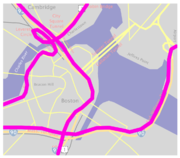
BOSTON
http://en.wikipedia.org/wiki/Boston,_Massachusetts
The image of brownstone Boston bounces off the shiny mirrored skyscrapers around it but, at street level, it's still a history buff's favourite American city. The past is everywhere, from colonial buildings downtown to the grand 19th-century mansions in South End to cosy musuems.
Boston Harbor Islands National ParkBoston Harbor is sprinkled with 34 islands, many of which are open to the public for trail walking, bird watching, fishing and swimming. The Boston Harbor Islands offer a range of ecosystems - sandy beaches, rocky cliffs, fresh and salt-water marsh and forested trails - only 45 minutes from downtown Boston.
Georges Island is the transportation hub for the islands and site of Fort Warren, a 19th-century fort and Civil War prison. Guided tours are available. From Georges Island, a free water taxi goes to some of the other islands including Grape Island, where the rangers lead a 'wild edibles' walking tour through wild raspberries and elderberries.
Isabella Stewart Gardner MuseumThis magnificent Venetian-style palazzo is filled with almost 2000 priceless (primarily European) objects, including outstanding tapestries and Italian Renaissance and 17th-century Dutch paintings. The palazzo itself, with a four-storey greenhouse courtyard, is a tranquil oasis that's worth the price of entry alone.
The museum is a monument to one woman's exquisite artistic taste. On her death in 1924, the will of 'Mrs Jack' stipulated that the collection not change one iota or the whole lot would go to auction.
That helps explain a few notably empty spaces on the walls: in 1990 the museum was robbed of nearly 200000000 worth of paintings, including a beloved Vermeer. The walls on which they were mounted will remain bare until the paintings are recovered (highly unlikely).
Children's MuseumThe interactive, educational exhibits at the delightful Children's Museum can keep kids from preschoolers to teenagers entertained for hours. Highlights include a bubble exhibit, a two-storey climbing maze, a rock-climbing wall, a hands-on construction site, intercultural immersion experiences and a beautiful play space for kids under three.
The museum is a monument to one woman's exquisite artistic taste. On her death in 1924, the will of 'Mrs Jack' stipulated that the collection not change one iota or the whole lot would go to auction.
That helps explain a few notably empty spaces on the walls: in 1990 the museum was robbed of nearly 200000000 worth of paintings, including a beloved Vermeer. The walls on which they were mounted will remain bare until the paintings are recovered (highly unlikely).
John F Kennedy Library & MuseumThis striking, modern, marble building - designed by I.M. Pei - was dubbed 'the shining monument by the sea' soon after it opened in 1979. The architectural centerpiece is the magnificent glass pavilion, with soaring 115-foot ceilings and floor-to-ceiling windows overlooking Boston Harbor.
The museum is a fitting tribute to JFK's life and legacy. The effective use of video recreates history for visitors who may or may not remember the early 1960s, a highlight of which is the treatment of the Cuban Missile Crisis. Family photographs and private writings - of both John and Jacqueline - add a personal but not overly sentimental dimension to the exhibits.
Interestingly, the library has an archive of writer Ernest Hemingway's manuscripts and papers. About 95% of his works can be accessed if you're interested in research, but there is no exhibit space.
Paul Revere House Paul Revere House was built in 1680 and is the oldest house in Boston. It's the former home of the patriot who carried advance warning of British manoeuvres to Lexington and Concord on the night of April 18, 1775.
New England AquariumTeeming with sea creatures, this giant fishbowl is equally popular with adults and children. Harbour seals and sea otters, frolicking in a large observation tank, introduce the main attraction: a three-storey cylindrical saltwater tank that swirls with more than 600 creatures great and small, including turtles, sharks and eels.
At the base of the tank, the penguin pool is home to three species of fun-loving penguins. Countless side exhibits explore the lives and habitats of other underwater oddities, including the latest exhibits on ethereal jellyfish and rare, exotic sea dragons
Museum of Fine Arts BostonThe Museum of Fine Arts Boston is one of the country's finest art museums. The vast galleries are especially strong in American painting, decorative arts, Asian treasures and European painting, including French impressionists. Adult tickets are good for two visits within 10 days (a handy feature, since there's so much to see).
Fenway ParkThe famous home of the Boston Red Sox is firmly entrenched in the culture and history of this city. Built in 1912 this is one of the most loved of the major league parks, with its real grass field, oak seats and kooky dimensions. It's also home to 'The Green Monster' - the affectionate nickname for the extra high left-field wall and the corny BoSox mascot.
Museum of Comparative ZoologyThis collection in the Harvard Museum of Natural History is perhaps politically incorrect, but oh-so entertaining. You've never seen so many stuffed birds and animals in one place before - endless rows of cases filled with the finest examples of taxidermy. Just the job for a twitcher who hates to get up in the morning.
Old South Meeting HouseColonists met at Old South Meeting House in 1773 to protest British taxation before dumping tea from British ships into the harbour. It is still a gathering place for discussion, although not much rabblerousing goes on anymore. Instead, it hosts concerts, theatre and lecture series, as well as walking tours, re-enactments and other historical programs.
Asia's Longest Underwater Expressway Tunnel in Operation
A 2,880-m underwater expressway tunnel that runs through the Huangpu River in
Shanghai was put into use Saturday, which links up the 99-km outer ring road of the biggest Chinese city. The tunnel, Asia's longest one underwater, has eight lanes and allows vehicles to travel at a maximum speed of 80 km per hour. Construction of the tunnel, formed with seven 45,000-ton tubes put together, costs 1.748 billion yuan (about 210.6 million US dollars). It will help reduce traffic congestion primarily caused by container lorries, many of which are heading to or leaving the Waigaoqiao Free Trade Zone in the northeast of the city. The tunnel was jointly invested by Shanghai AJ Corp and Shanghai Huangpu River Bridge Construction Co. Shen Xiufang, director of the Shanghai Tunnel Engineering & Rail Transit Design and Research Institute, the tunnel designer, said the 2,800-meter-long project sets a milestone for local construction. "It marks the city's first use of submersion technology to build a tunnel," she said. "We adopted many new techniques in its construction, such as the noise-reduction design, and the escape and emergency facility." Situated along the northern stretches of the city's Outer Ring Road, the tunnel, which includes a 736-meter-long submerged section, is comprised of three parallel tubes. The completion of the tunnel also marked the connection of the 99-kilometer Outer Ring Road where total investment has exceeded 17.5 billion yuan (US$ 2.12 billion). With the tunnel completed, Shanghai Ferry Co Ltd is considering closing its ferry line across the Huangpu River between Nenjiang Road in Puxi and Dongtang Road in Pudong. Currently, the ferry line is jammed with more than 3,000 containers lorries daily. Elsewhere, construction breaks ground today on the work of the Xiangyin Road Tunnel, linking Xiangyin Road in Puxi with the planned Wuzhou Avenue in Pudong. The 2.2-kilometer Xiangyin Road Tunnel, which has a total investment of 1.2 billion yuan (US$145.15 million), will become the sixth tunnel across the Huangpu River when it is completed by the end of 2005. The Shanghai Tunnel Engineering Co is the contractor on the project. "Presumably, it would reduce the traffic burden on the nearby Yangpu Bridge by 10 percent," said Yang Zhihao, an engineer at the institute responsible for designing the tunnel. Since the tunnel's Pudong entrance is close to a chemical plant, a new "water curtain" facility will be installed to block any possible poisonous gas leak, he said.
Tunnel transport :
http://www.yearbook.gov.hk/1998/ewww/14/1403/middle-middle.htm
Transport Infrastructure
Existing Road and Rail Network
At the end of 1998, Hong Kong had 1 865 kilometres of roads and 1 737 highway structures, three immersed-tube, cross-harbour tunnels, and eight road tunnels penetrating the hills of the territory. These facilities provide a comprehensive road network for Hong Kong.
The government owns six of the road tunnels - Lion Rock, Aberdeen, Airport, Shing Mun, Tseung Kwan O and Cheung Tsing - which are managed and operated by private companies under management contracts. Tolls are set and monitored by the government while the Airport Tunnel and Cheung Tsing Tunnel are free of charge.
The Lion Rock Tunnel, linking Kowloon and Sha Tin, began single-tube operation in 1967, with a second tube added in 1978. The 1.4-kilometre tunnel is the most heavily used government tunnel, with 95 000 vehicle trips daily. The toll was $6.
The Aberdeen Tunnel, opened in 1982, links the northern and southern parts of Hong Kong Island. It measures 1.9 kilometres and was used by 58 000 vehicles daily in 1998. The toll was $5.
The toll-free Airport Tunnel between Hung Hom and Kowloon Bay passes under the former site of Hong Kong International Airport at Kai Tak and was opened in 1982. It measures 1.3 kilometres and was used by 55 000 vehicles daily in 1998.
The Shing Mun Tunnel between Sha Tin and Tsuen Wan was opened in 1990 and measures 2.6 kilometres. An average of 54 000 vehicles each day paid the $5 toll in 1998.
The 900-metre Tseung Kwan O Tunnel, opened in 1990, links Kowloon and Tseung Kwan O new town. It was used by 55 000 vehicles daily in 1998. The toll was $3.
The toll-free, 1.6-kilometre Cheung Tsing Tunnel was opened in 1997 and links Kwai Chung and Tsing Yi. It was used by 90 000 vehicles daily in 1998.
The Cross-Harbour Tunnel, the Eastern Harbour Crossing, the Tate's Cairn Tunnel, the Western Harbour Crossing and the Tai Lam Tunnel were built by the private sector under 'build, Operate and Transfer' franchises.
The 1.9-kilometre Cross-Harbour Tunnel connects Causeway Bay on Hong Kong Island and Hung Hom in Kowloon. Opened in 1972, its daily patronage was 120 000 vehicles in 1998. It is one of the world's busiest four-lane road tunnels. The tolls, which included a government passage tax, ranged from $4 to $30 for different types of vehicles.
The Eastern Harbour Crossing was opened in 1989. It links Quarry Bay on Hong Kong Island and Cha Kwo Ling in Kowloon. A daily average of 71 000 vehicles used the two-kilometre tunnel in 1998. Tolls ranged from $8 to $45.
The Tate's Cairn Tunnel was opened to traffic in 1991, providing an additional direct road link between the north-eastern New Territories and Kowloon. At 3.9 kilometres, it is the longest road tunnel in Hong Kong. It was used by an average of 65 000 vehicles daily in 1998. Tolls ranged from $8 to $20.
The two-kilometre Western Harbour Crossing is the first six-lane cross-harbour road tunnel in Hong Kong. Opened in 1997, it links Sai Ying Pun on Hong Kong Island and the West Kowloon Reclamation near Yau Ma Tei in Kowloon. It was used by an average of 33 000 vehicles daily in 1998. Tolls ranged from $15 to $95.
The Tai Lam Tunnel measures 3.8 kilometres and, together with the 6.3-kilometre Yuen Long Approach Road, forms the Route 3 (Country Park Section) which extends from Ting Kau to Au Tau. Opened in May 1998, it was used by an average of 29 000 vehicles daily in 1998. Tolls ranged from $10 to $60.
Besides the network of road tunnels and highways, railways also form a vital part of Hong Kong's transport network. Hong Kong's rail system comprises a heavily utilised urban railway (the Mass Transit Railway - MTR), a busy suburban railway (the Kowloon-Canton Railway - KCR), and the Light Rail (LR). There is also a tramway serving as a local distributor on the northern shore of the Hong Kong Island and a funicular tramway running between Central (Garden Road) and the Peak.
New Roads and Railways Opened in 1997/1998
The relocation of the airport to Chek Lap Kok and the development of the Tung Chung new town required additional road links between Lantau and the urban areas. A new expressway system comprising the North Lantau Highway, Lantau Link, Cheung Tsing Highway, Cheung Tsing Tunnel, Tsing Kwai Highway, West Kowloon Highway and Western Harbour Crossing, was opened to traffic in mid 1997. In May 1998, the expressway system was augmented by the completion of the Ting Kau Bridge and the Route 3 (Country Park Section), which provided easy access to the North-West New Territories.
The strategic expressway system to Lantau and North-West New Territories needs to be carefully managed to ensure smooth traffic flow. Route 3 (Country Park Section) is managed and operated by the private sector franchisee. The Tsing Ma Control Area (TMCA), a 17-kilometre expressway network comprising Tsing Kwai Highway, Cheung Tsing Tunnel, Cheung Tsing Highway, North-West Tsing Yi Interchange, Lantau Link, Ting Kau Bridge and part of North Lantau Highway, is operated and maintained by a private management contractor. TMCA is equipped with extensive traffic control and surveillance system. The system provides a high degree of automation to regulate traffic flows, to assist in dealing with incidents and to provide useful information to motorists.
A one-way toll collection arrangement is adopted for the TMCA. Vehicles travelling on the Lantau Link will be charged twice the single journey toll when they return from Lantau Island. The double toll ranges from $20 to $80.
The $34 billion Airport Railway is an integral part of the transport links to connect the urban areas with the new airport and the Tung Chung new town. It comprises two services-the Airport Express Line and the Tung Chung Line. They were completed and opened to the public on June 22 and July 6, 1998, respectively. The Airport Express Line (AEL) provides a dedicated express rail service for passengers to and from the new airport. Running at a maximum speed of 135 kilometres per hour, the AEL carried about 22 000 passengers each day in 1998 with a journey time of about 23 minutes. It is the world's first purpose-built railway serving an airport with in-town check-in facilities. The Tung Chung Line (TCL) provides commuter services between Tung Chung new town and the urban areas. The TCL carried 110 000 passengers daily in 1998 with interchange facilities with other MTR lines at Hong Kong and Lai King.
New Railway Projects
After the completion of airport related transport network, the government is embarking on the planning and implementation of five new railway projects. Total investment in these projects amounts to some $120 billion. They are:
The 30.5-kilometre West Rail (Phase I), that connects West Kowloon and Tuen Mun via Yuen Long. Construction started in October 1998 for completion by the end of 2003;
The 12.5-kilometre Tseung Kwan O Extension, that extends the MTR from Lam Tin to Tseung Kwan O. The project is expected to be completed by the end of 2002;
The 11.4-kilometre Ma On Shan to Tai Wai rail link, that connects the existing KCR Tai Wai station and Lee On in the Ma On Shan new town;
The 1.5-kilometre Tsim Sha Tsui (TST) Extension, that extends the KCR from the existing Hung Hom terminus to a new station in TST East. Construction is expected to start in 2000 for completion in 2004; and
The 7.5-kilometre Sheung Shui to Lok Ma Chau spur line, that will connect the KCR at Sheung Shui with a new passenger rail boundary crossing at Lok Ma Chau. The government has invited the Kowloon-Canton Railway Corporation to prepare detailed proposals for implementing the project, which is scheduled for completion in 2004.
The Second Railway Development Study
The Second Railway Development Study (RDS-2) began in March. It aims to formulate a clear, coherent and comprehensive strategy for the provision of an integrated and environmentally friendly rail system to sustain the economic, social, land and housing developments of Hong Kong in the years ahead. New projects to be examined in the RDS-2 include the West Rail (Phase II), the East Kowloon Line, a fourth cross-harbour rail link, the North Hong Kong Island Line, a second connection from the Ma On Shan railway to the urban areas and the West Hong Kong Island Line. The study will be completed in September 1999, with interim recommendations on the most urgent projects before then.
Road Projects Under Construction
The construction of the Hung Hom Bypass and Princess Margaret Road Link started in March 1996. This will connect Hung Hom and Tsim Sha Tsui East with a system of elevated roads linking with Princess Margaret Road and Chatham Road. Upon its completion in 1999, the strategic link will provide access to the developments in the Hung Hom Bay reclamation and relieve traffic congestion at the Cross-Harbour Tunnel approach road.
To improve the junction between Hiram's Highway and Clear Water Bay Road, the construction of Phase II of the Hiram's Highway improvement works started in January 1997 for completion in 2000. Phase III of the works in Nam Wai and Ho Chung is scheduled to start in early 1999 for completion in 2001.
Improvement works to Castle Peak Road from Siu Lam to So Kwun Tan started in February 1997 for completion in late 1999. To further improve the road network to the new airport, construction of the Tsing Yi North Coastal Road is scheduled to start in January 1999 for completion in 2002.
Planned Road Projects
To further expand and improve Hong Kong's road network to cope with traffic demand, several strategic road projects are currently under study and design.
The eight-kilometre section of Route 7 connecting Kennedy Town to Aberdeen will provide a much-needed linkage to the southern part of Hong Kong to support the strategic development of the area.
Route 10 will run about 27.5 kilometres from Hong Kong Island to the North-West New Territories via North Lantau. Together with the planned Deep Bay Link, it will form part of the proposed crossing between Hong Kong and Shekou in Shenzhen. Route 10 will also relieve the traffic burden of the Lantau Link, and maintain road access to Lantau in the event that the Lantau Link has to be closed under inclement weather or emergencies.
Route 9 (section between Cheung Sha Wan and Sha Tin) will be a new 5.6-kilometre highway running from Sha Tin to West Kowloon. It will significantly alleviate traffic congestion at the Lion Rock Tunnel, Tate's Cairn Tunnel and Tai Po Road.
Other major new road projects under planning include the Central Kowloon Route between To Kwa Wan and Yau Ma Tei, the Central-Wan Chai Bypass and another section of Route 9 connecting Tsing Yi and Cheung Sha Wan.
Environmental Considerations
The environmental impact of new transport projects during both the construction and operation phases is carefully examined at the planning stage. Environmental mitigation measures, such as landscaping, artificial contouring of surrounding hillsides, the installation of noise barriers and noise insulation works are implemented where necessary to minimise the environmental impact of transport projects.
Road Opening Works
Besides serving as carriageways for vehicles and pedestrians, roads also accommodate various utility services, such as water and gas mains, sewers and electricity and telephone cables. To cope with the increasing demand for utility services and maintenance work, utility companies often have to excavate the carriageways and footpaths to lay more pipes, cables and ducts, and to carry out repair work. There were about 150 new road openings on each day in 1998. Road openings are co-ordinated and controlled by the Highways Department through a permit system, under which utility companies are required to carry out work to a required standard and within a time limit.
To co-ordinate work more effectively and to minimise traffic disruption the Highways Department holds monthly Road Opening Co-ordinating Committee meetings with the utility companies, the police and the Transport Department. A computerised utility management system was developed in 1997 to further improve co-ordination and minimise disturbance to road users.
Tunnel
This article is about underground passages. For uses of the word tunnel, see
Tunnel (disambiguation).
A disused railway tunnel now
converted to pedestrian and bicycle use, near
Houyet,
BelgiumColorful pedestrian Light Tunnel connecting two terminals in Detroit's
DTW airport.
The
North East MRT Line in
Singapore is a fully-underground rail line.
The
Allegheny Mountain Tunnel on the
Pennsylvania Turnpike.
A tunnel is an underground passageway. The definition of what constitutes a tunnel is not universally agreed upon. However, in general tunnels are at least twice as long as they are wide. In addition, they should be completely enclosed on all sides, save for the openings at each end. Some civic planners define a tunnel as 0.1 miles (0.16 kilometers) in length or longer, while anything shorter than this should be called a
chute. For example, the underpass beneath
Yahata Station in
Kitakyushu,
Japan is only 0.08 miles (0.13 km) long and therefore should not be considered a tunnel.
A tunnel may be for
pedestrians or
cyclists, for general road
traffic, for
motor vehicles only, for
rail traffic, or for a
canal. Some are
aqueducts, constructed purely for
carrying water — for consumption, for
hydroelectric purposes or as
sewers — while others carry other services such as
telecommunications cables. There are even tunnels designed as
wildlife crossings for
European badgers and other
endangered species. Some
secret tunnels have also been made as a method of entrance or escape from an area, such as the
Cu Chi Tunnels or the
tunnels connecting the
Gaza Strip to
Egypt. Some tunnels are not for transport at all but are fortifications, for example
Mittelwerk and
Cheyenne Mountain.
The longest canal tunnel is the
Standedge Tunnel in the United Kingdom, over three miles (5 km) long.
In the
United Kingdom a pedestrian tunnel or other underpass beneath a road is called a
subway. This term was used in the past in the
United States, but now refers to underground
rapid transit systems.
The central part of a rapid transit network is usually built in tunnels. To allow non-level crossings, some lines run in deeper tunnels than others. Rail stations with much traffic usually provide pedestrian tunnels from one
platform to another, though others use bridges.
http://en.wikipedia.org/wiki/Tunnel
Contents
[
hide]
1 Geotechnical investigation 2 Construction 2.1 Cut-and-cover 2.2 Boring machines 2.3 NATM 2.4 Pipe jacking 2.5 Underwater tunnels 2.6 Other 2.7 Choice of tunnels vs. bridges 3 Variant tunnel types 3.1 Double-deck tunnel 3.2 Short tunnels 3.3 Artificial tunnels 4 Examples of tunnels 4.1 In history 4.2 Longest 4.3 Notable 4.4 Other uses 5 Natural tunnel 6 Accidents 7 See also 8 References 9 External linksGeotechnical investigation
It is essential that any tunnel project starts with a comprehensive investigation of ground conditions. The results of the investigation will allow proper choice of machinery and methods for excavation and ground support, and will reduce the risk of encountering unforeseen ground conditions. In the early stages, the horizontal and vertical alignment will be optimised to make use of the best ground and water conditions.
In some cases, conventional desk and site studies will not produce sufficient information to assess, for example, the blocky nature of rocks, the exact location of fault zones, or stand-up times of softer ground. This may be a particular concern in large diameter tunnels. To overcome these problems, a pilot tunnel, or drift, may be driven ahead of the main drive. This smaller diameter tunnel will be easier to support when unexpected conditions occur, and will be incorporated in the final tunnel. Alternatively, horizontal boreholes may sometimes be used ahead of the advancing tunnel face.
Construction
Tunnels are dug in various types of materials, from soft clay to hard rock, and the method of excavation depends on the ground conditions.
Cut-and-cover
Cut-and-cover is a simple method of construction for shallow tunnels where a
trench is excavated and
roofed over. A strong overhead support system is required to carry the load of the covering material.
Two basic forms of cut-and-cover tunnelling are available:
Bottom-up method: A trench is excavated, with ground support as necessary, and the tunnel is constructed within. The tunnel may be of in situ concrete, precast concrete, precast arches, corrugated steel arches and such, with brickwork used in early days. The trench is then backfilled, with precautions regarding balancing compaction of the backfill material, and the surface is reinstated.
Top-down method: In this method, side support walls and capping beams are constructed from ground level, using slurry walling, contiguous bored piles, or some other method. A shallow excavation is then made to allow the tunnel roof to be constructed using precast beams or in situ concrete. The surface is then reinstated except for access openings. This allows early reinstatement of roadways, services and other surface features. Excavation machinery is then lowered into the access openings, and the main excavation is carried out under the permanent tunnel roof, followed by constructing the base slab.
Shallow tunnels are often of the cut-and-cover type (if under water, of the immersed-tube type), while deep tunnels are excavated, often using a
tunnelling shield. For intermediate levels, both methods are possible.
Large cut-and-cover boxes are often used for underground metro stations, such as
Canary Wharf tube station in London. This construction form generally has two levels, which allows economical arrangements for ticket hall, station platforms, passenger access and emergency egress, ventilation and smoke control, staff rooms, and equipment rooms. The interior of Canary Wharf station has been likened to an underground cathedral due to the sheer size of the excavation. This contrasts with most traditional stations on
London Underground, where bored tunnels were used for stations and passenger access.
Gotthard Base Tunnel under construction in the
Swiss AlpsCut-and-cover constructions of the
Paris MétroBoring machines
Main article:
Tunnel boring machineA tunnel boring machine that was used at
Yucca Mountain,
NevadaTunnel boring machines (TBMs) and associated back-up systems can be used to highly automate the entire tunneling process. There are a variety of TBMs that can operate in a variety of conditions, from hard rock to soft water-bearing ground. Some types of TBMs, bentonite slurry and earth-pressure balance machines, have pressurised compartments at the front end, allowing them to be used in difficult conditions below the
water table. This pressurizes the ground ahead of the TBM cutter head to balance the water pressure. The operators work in normal air pressure behind the pressurised compartment, but may occasionally have to enter that compartment to renew or repair the cutters. This requires special precautions, such as local ground treatment or halting the TBM at a position free from water. Despite these difficulties, TBMs are now preferred to the older method of tunneling in compressed air, with an air lock/decompression chamber some way back from the TBM, which required operators to work in high pressure and go through decompression procedures at the end of their shifts, much like divers.
Until recently the largest TBM built was used to bore the Green Heart Tunnel (Dutch: Tunnel Groene Hart) as part of the
HSL-Zuid in the Netherlands. It had a diameter of 14.87 m.
[1]Nowadays even larger machines exist: two for the M30 ringroad in Madrid, Spain, and two for the Chong Ming tunnels in Shanghai, China. These machines are 15,2 m and 15,4 m in diameter respectively. The two machines for Spain were built by Mitsubishi/Duro Felguera and
Herrenknecht. The TBMs for China were built by Herrenknecht.
NATM
The
New Austrian Tunneling Method (NATM) was developed in the 1960s. The main idea of this method is to use the geological
stress of the surrounding
rock mass to stabilize the tunnel itself. Based on
geotechnical measurements, an optimal
cross section is computed. The excavation is immediately protected by thin
shotcrete, just behind the excavation. This creates a natural load-bearing ring, which minimizes the rock's
deformation.
By special
monitoring the NATM method is very flexible, even at surprising changes of the
geomechanical rock consistency during the tunneling work. The measured rock properties lead to appropriate
tools for tunnel
strengthening. In the last decades also
soft ground excavations up to 10 km became usual.
Pipe jacking
Pipe Jacking, also known as pipejacking or pipe-jacking, is a method of tunnel construction where hydraulic jacks are used to push specially made pipes through the ground behind a tunnel boring machine or shield. This technique is commonly used to create tunnels under existing structures, such as roads or railways
Underwater tunnels
There are also several approaches to underwater tunnels, for instance an
immersed tube as in the
Sydney Harbour, and the
Posey and Webster Street Tubes which connect the cities of
Oakland and
Alameda, California, running beneath the
Alameda-Oakland Estuary.
Other
Other tunneling methods include:
Drilling and blasting Slurry-
shield machine
Wall-cover construction method.
Choice of tunnels vs. bridges
For water crossings, a tunnel is generally more costly to construct than a bridge. Navigational considerations may limit the use of high bridges or
drawbridge spans intersecting with shipping channels, necessitating a tunnel. Bridges usually require a larger footprint on each shore than tunnels. In areas with expensive real estate, such as
Manhattan and urban
Hong Kong, this is a strong factor in tunnels' favor. Boston's
Big Dig project replaced elevated roadways with a tunnel system to increase traffic capacity, hide traffic, reclaim land, redecorate, and reunite the city with the waterfront. Examples of water-crossing tunnels built instead of bridges include the
Holland Tunnel and
Lincoln Tunnel between
New Jersey and Manhattan in
New York City, and the
Elizabeth River tunnels between
Norfolk and
Portsmouth, Virginia and the
Westerschelde tunnel, Zeeland, Netherlands. Other reasons for choosing a tunnel instead of a bridge include avoiding difficulties with tides, weather and shipping during construction (as in the 51.5 km
Channel Tunnel), aesthetic reasons (preserving the above-ground view, landscape, and scenery), and also for weight capacity reasons (it may be more feasible to build a tunnel than a sufficiently strong bridge).
Some water crossings are a mixture of bridges and tunnels, such as the
Denmark to Sweden link and the
Chesapeake Bay Bridge-Tunnel in the eastern
United States.
Variant tunnel types
Double-deck tunnel
Some tunnels are double-deck, for example the
Eastern Harbour Crossing in
Hong Kong, where roads and rails (the
MTR metro) occupy different decks of the tunnel.
The two major segments of the
San Francisco-Oakland Bay Bridge (completed in 1936) are linked by a double-deck tunnel, once the largest diameter tunnel in the world. At construction this was a combination bidirectional rail and truck pathway on the lower deck with automobiles above, now converted to one-way road vehicle traffic on each deck.
A recent double-decke tunnel with both decks for motor vehicles is the Fuxing Road Tunnel in
Shanghai, China. Cars travel on the two-lane upper deck and heavier vehicles on the single-lane lower.
Short tunnels
Artificial tunnels
Overbridges can sometimes be built by covering a road or river or railway with brick or still arches, and then levelling the surface with earth. In railway parlance, a surface-level track which has been built or covered over is normally called a covered way.
Snow sheds are a kind of artificial tunnel built to protect a railway from avalanches of snow. Similarly the
Stanwell Park,
New South Wales steel tunnel, on the
South Coast railway line, protects the line from rockfalls.
Common utility ducts are man-made tunnels created to carry two or more utility lines underground. Through co-location of different utilities in one tunnel, organizations are able to reduce the costs of building and maintaining utilities.
Examples of tunnels
In history
World's oldest underwater tunnel is rumored to be the
Terelek kaya tüneli under
Kızıl River, a little south of the towns of
Boyabat and Duragan in
Turkey. Estimated to have been built more than 2000 years ago (possibly 5000) it is assumed to have had a defense purpose.
The
qanat or
kareez of
Persia is a water management system used to provide a reliable supply of water to human settlements or for irrigation in hot, arid and semi-arid climates. The oldest and largest known qanat is in the Iranian city of Gonabad which after 2700 years still provides drinking and agricultural water to nearly 40,000 people. Its main well depth is more than 360 meters and its length is 45 kilometers.
Inside the
Eupalinian aqueduct,
Samos, in one of the most spacious parts of it
In contrast, a modern underpass in Norway
Interior of the
Thames Tunnel,
London, mid 19th century
The
Eupalinian aqueduct on the island of
Samos (
North Aegean,
Greece). Built in 520 BC by the ancient Greek engineer
Eupalinos of
Megara. Eupalinos organised the work so that the tunnel was begun from both sides of mount Kastro. The two teams advanced simultaneously and met in the middle with excellent accuracy, something that was extremely difficult in that time. The aqueduct was of utmost defensive importance, since it ran underground and it was not easily found by an enemy who could otherwise cut off the water supply to
Pythagoreion, the ancient capital of
Samos. The tunnel's existence was recorded by Herodotus (as was the mole and harbour, and the third wonder of the island, the great temple to Hera, thought by many to be the largest in the Greek world). The precise location of the tunnel was only re-established in the 19th century by German archaeologists. The tunnel proper is 1030 metres (3,430 ft) long and visitors can still enter it
Eupalinos tunnel.
Sapperton Canal Tunnel on the
Thames and Severn Canal in
England, dug through hills, which opened in 1789, was 3.5 km long and allowed
boat transport of
coal and other goods. Above it runs the
Sapperton Long Tunnel which carries the "Golden Valley" railway line between
Swindon and
Gloucester.
The tunnel created for the first true steam locomotive, the
Penydarren locomotive, was built prior to
Richard Trevithick was able to make his historic journey from
Penydarren to
Abercynon in 1804. Part of this tunnel can still be seen at
Pentrebach,
Merthyr Tydfil. This is arguably the oldest railway tunnel in the world, for self-propelled steam engines on rails.
The
Montgomery Bell Tunnel in Tennessee, a 290 water diversion tunnel built by slave labor in 1819, was the first "full-scale" tunnel in the United States.
Box Tunnel in England, which opened in 1841, was the longest railway tunnel in the world at the time of construction. It was dug and has a length of 2.9 km.
The
Thames Tunnel, built by
Marc Isambard Brunel and his son
Isambard Kingdom Brunel and opened in 1843, was the first underwater tunnel and the first to use a
tunnelling shield. Originally used as a foot-tunnel, it is now part of the
East London Line of the
London Underground.
James Greathead, in constructing the City & South London Railway tunnel beneath the Thames, in the late 1880s, brought together three key elements of tunnel construction under water: 1) shield method of excavation; 2) permanent cast iron tunnel lining; 3) construction in a compressed air environment to inhibit water flowing through soft ground material into the tunnel heading.
[1] St. Clair Tunnel, opened in 1890, linked those elements on a much larger scale and was the first full-size subaqueous tunnel in North America
[1] The
Cobble Hill Tunnel and
Murray Hill Tunnel in
New York City are the world's oldest railway tunnels lying below streets, roofed over in 1850 and the 1850s, respectively.
The oldest sections of the
London Underground were built using the cut-and-cover method in the 1860s. The Metropolitan, Hammersmith & City, Circle and District lines were the first to prove the success of a
metro or subway system.
St. Clair Tunnel, opened in 1890, was the first full-size subaqueous tunnel in North America
Col de Tende Road Tunnel, one of the first longer road tunnels under a pass, runs between France and Italy. At its opening it may have been one of world's longest road tunnels.
The
Holland Tunnel was the first underwater tunnel designed for automobiles, which required a novel
ventilation system.
See also the
History of
Rapid transit.
Longest
Main article:
List of tunnels by lengthThe
Seikan Tunnel in
Japan is the longest rail tunnel in the world at 53.9 km (33.4 miles), of which 23.3 km (14.5 miles) is under the sea.
The
Channel Tunnel between
France and the
United Kingdom under the
English Channel is the second-longest, with a total length of 50 km (31 miles), of which 39 km (24 miles) is under the sea.
The
Lötschberg Base Tunnel opened in June 2007 in
Switzerland is the longest land tunnel, with a total of 34.5 km (21.5 miles).
The
Lærdal Tunnel in Norway from
Lærdal to
Aurland is the world's longest road tunnel, intended for cars and similar vehicles, at 24.5 km (15.2 miles).
The
Zhongnanshan Tunnel in
People's Republic of China opened in January 2007 is the world's longest
highway tunnel and the longest road tunnel in Asia, at 18.0 km (11.3 miles).
Päijänne-tunneli is the world's longest complete tunnel that is bored into rock. It is located in southern
Finland and it is 120 km long. Its purpose is to provide the
Greater Helsinki metropolitan area with fresh water.
Notable
The
Lincoln Tunnel between
New Jersey and
New York is one of the busiest vehicular tunnels in the world, at 120,000 vehicles/day.
The
Fredhälls Tunnel in
Stockholm,
Sweden Williamson's tunnels in
Liverpool, built by a wealthy eccentric are probably the largest underground folly in the world.
New York City Water Tunnel No. 3[2], started in 1970, has an expected completion date of 2020.
The
Chicago Deep Tunnel Project is a network of 109 miles (197 km) of tunnels designed to reduce flooding in the
Chicago area. Started in the mid 1970s, the project is due to be completed in 2019.
Moffat Tunnel in
Colorado straddles the
Continental Divide. The tunnel is 6.2 mi (10.0 km) long and at 9,239 feet (2,816 m) above sea level is the highest railroad tunnel in the
United States.
The
Fenghuoshan tunnel on
Qinghai-Tibet railway is the world's highest railway tunnel.
The
Houston Downtown Tunnel System is a system of tunnels about twenty feet below
Houston's downtown street system. The system forms a network of subterranean, climate-controlled, pedestrian walkways that link twenty-five full city blocks.
The
Sydney Harbour Tunnel in
Sydney,
Australia was built in 1992 to augment the
Sydney Harbour Bridge.
Other uses
Excavation techniques, as well as the construction of underground bunkers and other habitable areas, are often associated with
military use during armed conflict, or civilian responses to threat of attack.
The use of tunnels for mining is called
drift mining.
Natural tunnel
Natural Tunnel State Park (Virginia) features an 850 foot (255 m) natural tunnel, really a limestone cave, that has been used as a railroad tunnel since 1890.
Punarjani GuhaSnow tunnels are created by voles, chipmunks and other rodents for protection and access to food sources. Larger versions are created by humans, usually for fun.
For more information regarding tunnels built by animals, see
BurrowAccidents
Balvano train disasterBalvano train disaster
From Wikipedia, the free encyclopedia
Jump to:
navigation,
searchIn the Balvano train disaster of
March 3,
1944, around 530 people riding on a steam-hauled train died of
carbon monoxide poisoning when the train stalled in a tunnel. The accident occurred in southern
Italy, near
Balvano (
Basilicata).
Ordinarily, the trains on this line were hauled by electric
locomotives which of course emit no fumes, but due to war damage to the electrification system, steam engines were replacing
electric locomotives. The tunnel was steeply graded and the train grossly overloaded. The train stalled with almost all the cars inside the tunnel. The passengers and crew, most of whom would have been asleep, were overcome by the smoke and fumes so slowly that they failed to notice the dangers. The only survivors were in the last few cars which were still in the open air.
2006
anuary - June
January 6,
2006 –
Possum Point, Virginia,
United Sates: - A broken
CSX rail causes VRE Train #304 to derail at Possum Point. The last 3 cars of the 6 cars came off the track, but did not fall over. NTSB found that CSX failed to post speed restrictions and repair/replace the track in a timely fashion. There were only a few minor injuries.
[54] January 23,
2006 –
Bioče train disaster: A passenger train crashes into a ravine near
Podgorica, killing 46 and injuring 198.
[55] January 29,
2006 – A broken rail causes a derailment near
Jhelum in the Punjab, killing 2 and injuring 29. Poor
maintenance is officially being cited as cause of the accident, but sabotage was suspected by some authorities. The government inquiry later blamed defective and aging rails.
[56][57][58][59][60][61][62] February 16,
2006 –
Serres, Greece: An inter-city train strikes a truck at a grade crossing near
Serres and derails. A passenger and the truck driver die, and 20 on the train are injured.[
citation needed]
February 17,
2006 – High winds derail six
Canadian Pacific freight cars on the
Saint-Laurent Railway Bridge between
Montreal and
Kahnawake, Quebec, leaving them dangling precariously over the water. It takes several days to remove the cars, disrupting rail service.
[2] [3] March 10,
2006 –
Hualien,
Taiwan- 5 railroad workers die when hit by a southbound train.
March 13,
2006 –
Austin, Texas,
United States:
Tara Rose McAvoy, 18, the reigning
Miss Deaf Texas, is killed by the snowplow on a 65-car
Union Pacific freight train while trespassing on the tracks and text-messaging her parents. The train sounded its horn repeatedly and attempted to apply the emergency brakes but could not stop in time.
[63] April 5,
2006 –
Indian Orchard, Massachusetts,
United States:
Patrick Deans, 18, High School football player, struck and killed by a
CSX freight train while trespassing on the tracks. Two CSX trains were passing at the time. Patrick was able to escape being struck by one, but was struck by the other.
[64] April 15,
2006 –
Gubuck,
Java: 13 die and 26 are injured as two trains collide and wreckage falls into a paddy field. One Swiss man was among the injured. Human error by the driver was officially blamed.
[65][66] April 28,
2006 –
Victoria, Australia: A
V/Line VLocity high-speed train is derailed when struck by an 18 wheeler truck, killing 2 and injuring 28 on the
Ballarat to
Ararat line.
[67] May 25,
2006 –
Lismore, Victoria: truck fails to stop at level crossing, derailing trains and causing massive pileup of wagons.
[68] Mist/fog is factor.
June 12,
2006 –
Netanya,
Israel: A passenger train from
Tel Aviv to
Haifa derails after colliding with a lorry on a
level crossing, killing 5 and injuring more than 100.
[69] June 14,
2006- Madera, California: 2 BNSF Railway Freight trains collide head on due to one of the trains running a red signal. One of the train's crews, the one that ran the red, was suspected to be high on cocaine. One of locomtives happened to be video recording, and the video is now widely seen on
Youtube and related sites.
July – December
July 3,
2006 –
Valencia metro accident in
Valencia,
Spain: A
Valencia Metro train derails after leaving Jesús station, killing 41 and injuring at least 47. The records of the train's
black box show that the train passed a bend where the speed is limited to 40 km/h at 80 km/h.
[70][71] July 11,
2006 – A
series of bomb attacks strikes
commuter trains in
Mumbai,
India, killing at least 200.
[72] July 11,
2006 – A train collided with crowded bus at an unmanned railroad crossing at
Akkelpur,
Jaipurhat,
Bangladesh, killing at least 33, another 30 are injured. Local official blamed for a bus was draged along for several yard by the train aftermath collision.
July 14,
2006 –
Luxembourg: A man sets a newspaper alight on board a train, resulting in a fire that injures 31, with 7 suffering critical injuries. The culprit is suspected to have a mental disorder.
[73] August 18,
2006 two carriages catch fire on the Chennai-Hyderabad Express near Secundrabad station
August 21,
2006 –
Egypt: Two trains collide in the town of
Qalyoub, 12 miles (20 kilometers) north of
Cairo, killing 57 people and injuring 128.
[74] August 21,
2006 –
Spain: A speeding eastbound
RENFE intercity train derails in Villada, 40 km west of
Palencia, leaving six people dead and 36 injured.
[75][76] August 27,
2006 –
Zimbabwe: 5 die in a
head-on collision between a passenger train and a freight train 30 km south of
Victoria Falls.
[77] September 4,
2006 –
Egypt: A passenger train collides with a freight train north of
Cairo, killing five and injuring 30.
[78][79]Wikinews has related news:
Transrapid collision in Germany kills 23 September 22,
2006 –
Lathen,
Emsland,
Germany: 21 passengers and two maintenance workers die and many more are injured when a
German Transrapid train collides with a
maintenance of way vehicle on the system's test track near the
Netherlands border. See also:
2006 Lathen maglev train accident.
[80][81][82][83]Wikinews has related news:
Trains collide in Northern France October 11,
2006 –
2006 Zoufftgen rail crash, near
Metz,
France: Passenger and freight trains
collide head on at
Zoufftgen, Moselle, close to the
Luxembourg border. 5, including the drivers of both trains, die and 20 are injured.
[84] The accident is ascribed to human error in the controlling signalling centre in Luxembourg.
October 17,
2006 –
Rome Metro collision,
Italy: Two metro trains
collide at Rome's Vittorio Emanuele
metro station, killing at least one person and injuring around 60.
[85] October 20,
2006 –
New Brighton, PA - A
Norfolk Southern unit train of tank cars containing
ethanol derails on a bridge over the
Beaver River. The resulting fire burns for days and forces some evacuations.
[86][87] November 9,
2006 –
India- 40 die and 15 injured in a West Bengal rail accident.[
citation needed]
November 9,
2006 – Baxter,
California - Six cars of a runaway maintenance train derail, killing two of the crew.
[88][89] November 13,
2006 –
South Africa - A
Metrorail train
smashes into a truck carrying farm workers at a level crossing near
Somerset West, killing 27.
[90] November 20,
2006 –
India- A bomb explodes on a train near Belacoba station in
West Bengal,
India, killing 7 and injuring 53. See
2006 West Bengal train disaster.
[91] November 20,
2006 - A train
passes a red signal causing a
head-on collision in
Rotterdam. The passenger train was empty and none were injured, but there was extensive damage to the rail track and its overhead power lines
[92] November 21,
2006 –
Arnhem,
Netherlands - A train
passes a red signal causing a
head-on collision.
[93] November 30,
2006 –
North Baltimore, OH - 15 cars carrying steel derailed when the train inadvertently switched to a side track. These cars then impacted a coal train on a parallel set of tracks, causing four of its cars to also derail. The PUCO blamed the accident on a chain hanging from one of the rolling stock, which engaged a switch handle on the tracks. The chain activated the switch handle, causing a shift of the rails. Three people who were in vehicles waiting for the train to pass were injured as a result of the accident, none seriously.
[94][95] December 1,
2006 –
Bihar,
India -
Bhágalpur in the Ganges a portion of the 150-year-old 'Ulta Pul' bridge being dismantled collapsed over a passing train of India's Eastern Railways, killing 35 and injuring 17.
[96][97] December 13,
2006 –
Avio,
Italy, a freight train operated by Trenitalia ignores a red signal and crashes on a freight train of the private company Rail Traction Company. Two Trenitalia engineers die in the violent crash
[98] In the industrial town of Cuautitlan outside Mexico city, 24 people lost lives on 28 December when their bus collided with a 36-wagon freight train. Another 12 passengers were hurt. Police arrested the bus driver who reportedly tried to flee the scene.
2007
January 4,
2007 –
Hatay Province,
Turkey: A freight train smashes into a truck carrying farm workers at a railroad crossing in
Hatay Province,
Turkey, killing 7 and injuring 19.
[99] January 10,
2007 –
Woburn, MA - A MBTA Commuter train crashes into a work crew, killing two members of the crew and injuring 3 other crew members. Additionally 40 passengers on the train were also injured
January 16,
2007 –
Central Java,
Indonesia: The Senja
Bengawan train derails, leading to five fatalities.
[100] February 6,
2007 –
Hungary: Train collision between Almásfüzítő and Komárom stations. An EU Regio passenger train hit the end of a freight with speed of 101 km/h. The driver of the passenger train has died, 4 passengers injured.
February 19,
2007 –
2007 Samjhauta Express bombings Deewana, near
Panipat,
Haryana State,
India: At least 68 die in a suspected bomb blast on the Delhi-Attari Special train (the "
Friendship Express") near Deewana, about 80 km north of
Delhi, at around 23:55 local time.
[101][102]Wikinews has related news:
Virgin Train crashes in England February 23,
2007 –
Grayrigg rail crash,
United Kingdom: A
Virgin trains Pendolino service from
London Euston to
Glasgow Central derails at Grayrigg Cottage near
Oxenholme,
Cumbria. One woman dies. A
set of points is thought to be the cause of the accident; the
West Coast Main Line is closed for several days.
[103] February 28,
2007 – A wind blows 10 passenger rail cars off the track near
Turfan,
China, killing 3 passengers and seriously injuring 2 others.
[104][105] March 6,
2007 – A freight train collide with
Diivarasekwa-
Mbare regular route bus at rail crossing, outskirt of
Harare,
Zimbabwe, killing 34, another 30 are injured.
April 16,
2007 – A passenger train crashes into a minibus carrying local council officials at an unmanned rail crossing in southern India, killing 11 and injuring another 12 in the vehicle. Seven of the injured were hospitalized in serious condition. The vehicle was carrying 23 people.
June 5,
2007 –
Kerang train crash,
Victoria,
Australia. A
B-Double truck collided with a Melbourne-bound passenger train 6 kilometres north of
Kerang at the Murray Valley Highway level crossing, killing 11 rail passengers and injuring 23.
June 15,
2007 – Two trains collided on the Italian island of
Sardinia, killing 3.
[106] July 4,
2007 – A rail worker was killed by train numbered D1 near Jialing railway station. He only saw the up train numbered T48 but did not see the down train numbered D1 from the other direction.
July 16-
17,
2007 – Two
Amtrak Silver Star trains on the
Tampa to
Miami route crash into automobiles and derail in two separate instances, one in
Lakeland and one in
Plant City. Four people were killed in the first wreck; one was killed in the second accident. The casualties were in the cars that collided with the trains; nobody on either train was seriously injured.
[107] July 16,
2007 – 15 carriages from a train carrying yellow phosphor derail and catch fire, releasing toxic fumes affecting 14 villages in a 90 km² area.
[108] July 30 - Train crash in Caracas subway leaves 1 dead, 6 injured. Two subway trains collide in Venezuela's capital. The accident took place in a tunnel near the Plaza Sucre station in western Caracas, Civil Protection chief Antonio Rivero said. Subways are generally equipped with
ATP and
ATC so such an accident is hard to explain.
August 1,
2007 –
Benaleka,
Kasai-Occidental province,
Democratic Republic of the Congo. A passenger train derails killing about 100 people and injuring more than 200 others, many riding on the roof.
[109][110] August 7,
2007 – 32 passengers injured as Jodhpur-Howrah Express derails near Juhi Bridge,
Kanpur,
India.
August 24,
2007 – Two persons died, five are injured when a locomotive and a freight train collide near
Čortanovci,
Serbia.
[111] August 30,
2007 – 8 passengers killed and 80 injured when a commuter train collides with an empty train at
Nova Iguaçu, near
Rio de Janeiro,
Brazil.
[112] October 3,
2007 – Moving over the
CSX east coast main line, the
Amtrak Silver Meteor collided into a
tractor-trailer after it attempted to cross a
grade crossing in
Port Wentworth, GA. No serious injuries were reported.
[113] October 13,
2007 – 4 killed, over 50 injured when rear
carriages of Probhati Express
derails near
Dhaka,
Bangladesh.
October 10,
2007 – A
CSX train carrying
ethanol and
butane derails in
Painesville and
Painesville Township, Ohio, causing an evacuation and fire that took several days to burn out.
[114][115] October 22,
2007 – Train carrying
Gasoline derails in
Middlebury, Vermont causing an evacuation. At least one car caught fire and several others were leaking gasoline into
Otter Creek (Vermont).
[116] October 29,
2007 –
BNSF Railway two-train derailment in
Clara City, Minnesota; A
hydrochloric acid spill, prompting the evacuation of about 350 people.
[117] November 3,
2007 – 2
KTX trains collided inside Busan Station, with no casualties.
[118] November 9,
2007 –
CSX train derailment in
District of Columbia dumps 10 rail cars of
coal in the
Anacostia River. Improperly secured, free-rolling cut of hoppers from Bennington Yard rolls onto out-of-service bridge, which collapses.
[119] November 30,
2007 –
Amtrak train No. 371, the Pere Marquette, strikes last car of COFC freight train on
Norfolk Southern, ex-
PRR line, near 65th Street in
Chicago. Two people in the cab of P-42DC No. 8 are injured, and many passengers shaken up, including three critical, but crumple zone design of locomotive is effective and prevents worse results. Engineer was running approximately 40 mph in a 15 mph zone.
December 19,
2007 –
Mehrabpur train derailment,
Mehrabpur,
Pakistan: A crowded passenger express train derails down an embankment 200km north-east of
Karachi at about 2:20 am
PST, killing 35 people and injuring about 269, 10 critically.
2008
January 23,
2008 – When passenger train numbered D59 high-speed train
Beijing-
Qingdao plunged into a state owned construction zone where 16th Group workers started safety maintenance of a stretch track at Fangzi,
Weifang,
Shandong,
China, killing 18 workers, injuring another nine.
January 25,
2008 – Silver Star Train 91 collided with a garbage truck sitting on the tracks on CR 427 in
Longwood, Florida while waiting for the traffic light to change at the intersection next to the crossing. Both occupants of the garbage truck were not wearing their seat belts and were ejected, one was seriously injured and the other occupant of the truck was killed, there were no injuries on the train .
January 25,
2008 – Sunset Limited Train 1 collided with a semi truck in north-east Harris County, Texas. The driver of the truck was taken to the hospital with minor injuries.
January 27,
2008 – A
Pamukkale Express bound for
Denizli, with 436 passengers on board derailed after two cars rolled over at
Kutahya due to ice on the tracks in western
Turkey, killing nine, and injuring another 50.
February 1,
2008 – East Midlands Connect service from
Nottingham to
Norwich involved in an incident at
Barrow-on-Soar. The train hit a footbridge that was in its path, after a road vehicle had struck and damaged the bridge causing it to be foul of the line. Six passengers were on board the service and the driver had to be cut free from the driving cab.
[120] February 4,
2008 – According to
Chinese press report, A 17 car freight train derailed, crushing several houses at Qujing,
Kunming-
Guizhou Line,
Yunnan,
China, killing at least six.
February 5,
2008. – Two people died and 1 was injured in a so-called 'fatal chain reaction accident' at a fog-obscured rail crossing in Boswell, about 30 miles west of Lafayette,
Indiana. The crash involved 6 vehicles and a 50 car train. The rural crossing has seen 5 other crashes, 2 of which were fatal, since 1984. A major
FRA safety review is now planned for this accident hot-spot. The 2 other fatalities were on- October 10,
1984 and February 7,
1986 between a train and a truck, in which both truck drivers and the truck's passenger in the 1984 crash died.
[121][122] February 29,
2008. – Nine people became victims of fire in
Bulgarian State Railways' train No.2637. The night train was travelling from
Sofia to the north-eastern town of
Kardam in Dobrich region. The fire started in a couchette carriage, which had 35 people in it at the time, and then spread to a sleeping coach with 27 people. It broke out as the train was entering the town of
Cherven bryag, around midnight, and took more than three hours to extinguish. Among the victims of the fire was the
Rasho Rashev, the director of Bulgaria's National Archaeological Institute. Bulgarian government declared
March 5 a day of mourning in memory of the victims of the deadly fire.
[123][124] March 1 - containers blown off train by wind between
Tring and
Cheddington; also
Shap [125] March 9,
2008 – in the
Dolores level crossing accident a
Mar de Ajó-Buenos Aires regular route bus disregards the National Highway Route 2's crossing signal, where
Buenos Aires-
Mar del Plata nightly express train with 250 passenger onboard, where hit the bus at El Rápido Argentino line, outskirt of
Dolores, province of Buenos Aires,
Argentina, killing 26, another 60 injured.
[126] [127] March 25,
2008 –
Canton, MA - A MBTA train crashes into a runaway box car at Canton Junction station injuring 150 people onboard.
April 16,
2008 – According to
ATN Bangla television report, a
Dinajpur-
Dhaka Ekoto Express train collided with a local bus on a level crossing at outskirt of
Kalihati,
Tangail,
Bangladesh, killing 18 and injuring 30.
April 26,
2008 – Collision between a
InterCityExpress train and a herd of sheep at the mouth of the German longest rail tunnel, 19 of the train's 135 passengers being lightly injured. Four people suffered fractures.
April 28,
2008 –
2008 China Railway train T195 accident It has been reported that train No.T195 carrying approximately 1200 passengers from
Beijing to
Qingdao derailed at approximately 4:38am and was then hit by the No.5034 (
Yantai to
Xuzhou) passenger train at approximately 4:41am, also with approximately 1200 passengers aboard. The incident occurred at a section of temporary detour tracks Zhoucun-Wangcun,
Hejiacun, on the outskirts of
Zibo,
Shandong,
China, while the original tracks were being upgraded. The detour tracks had a lower speed limit of 80km/h, but the speed limit failed to be delivered to T195's operation monitor system or driver, and the driver was following the regular speed limit, so T195 was running at the regular speed of 131km/h before it derailed. It was reported that fourteen passenger cars had been crushed, 72 people had been killed and 416 injured.
May 4,
2008 – According to Thai National Railroad and
MCOT television network report, a
Sungai Kolok-
Pattaluna passenger train carrying 400 passengers onboard derailed at outskirts of Sungai Kolok,
Songkhla,
Thailand, killing one and injuring 30.
May 5,
2008 – According to
Sudanese newspaper Al-Ray al-Am web site report, a 20 car freight train carrying illegal passengers, and including
Kordofan University students derailed at outskirts of
Al-Foula,
South Kordofan,
Sudan, killing 14 and injuring 28.
[128] May 10,
2008 – Romanian National Railway Company (CFR) passenger train No 1661 going from Bucharest to Iasi derailed near station Valea Calugareasca (Prahova county), around 16:55 local time (EET) while travelling at a speed of 68 km/h. There was a maximum speed limit on that sector of 70 km/h. A 17 year old girl died and 4 other persons were injured. The locomotive and 3 train cars were thrown off the lines. 2 of the cars were severely damaged. The cause of the accident is supposed to be a defective switch.
May 14,
2008 – According to
ATN Bangla television report, a Upaban Express train rammed into the rear of Noakhali Express train at Ashuganj station,
Brahmanbaria,
Bangladesh, killing 8, another injuring are 100.
May 16,
2008 Ottumwa,
Iowa. A local man is killed after being struck by a train at a level crossing, At least six people had seen the pedestrian on one track at around 5 p.m., waiting for a train on the other track to pass. They said he apparently didn’t see the second train coming up behind him, traveling along the track on which he stood.
May 28,
2008 – Boston
MBTA Green Line D Train
crashed into the rear of another train on the same line in
Newton, Massachusetts between Woodland and Waban "T" stops
June 23,
2008 – A freight train rammed into a minibus at a level crossing in
Nurdagi,
Gaziantep,
Turkey, killing 11 bus passengers.
Pages in category "Tunnels"
The following 36 pages are in this category, out of 36 total. Updates to this list can occasionally be delayed for a few days.
Tunnel*
List of road-rail tunnels List of tunnels by locationA
Anzob TunnelB
Blue Ridge Parkway tunnels Boring (mechanical) Bridge-tunnelD
Drilling and blasting Dudley Ward TunnelE
Earth pressure balance Escape tunnelH
Harvey TunnelI
Immersed tubeJ
Juckville TunnelK
Kennedy TunnelL
Liefkenshoek TunnelM
Malinta Tunnel Miami port tunnel Microtunnel boring machine Microtunneling MolingN
New Austrian Tunnelling methodO
OosterweelconnectionR
Rathole tunnelS
Sarajevo TunnelS cont.
Smuggling tunnel Steel Casing Pipe SubterreneT
Third Tunnel of Aggression Trenchless technology Tunnel boring machine Tunnelling shieldU
Utility tunnelV
Ventilation shaftW
Western Wall Tunnel Wildlife crossing